Recommended children's booklists sorted by age or topic

Publisher: Phaidon Press Ltd

‘If you need space for…comfy places to read; listening to stories; finding out about the world…what building do you need?’ This is just how What’s That Building? by Rebecca Donnelly is constructed. Each double-page spread is a guessing game for readers: put together the clues using the pictures and work out what the building is, then turn the page and all is revealed, along with a detailed explanation of what the building has inside it, what it’s made of, and why.

With each new building the reader finds themself immersed in a mini world full of life depicted in the detailed illustrations by Jocelyn Cho. A museum jammed packed with exhibits; a planetarium full of possibility; a school teaming with children – each building has its own structure and design, perfect for the job in hand. An added mystery element is the ‘hidden’ architect on each page: similar to a Where’s Wally search, every building houses its own architect-in-situ – scan the pages to find her!

Written, designed and illustrated by an all-female crew, this book is a refreshing take on picture books about buildings and building designs. Each building is packed with unusual characters too – spot the penguin pilot and the teddy bear traveller at the airport, for example. Modern and inclusive, this large, hardback non-fiction book deserves a place in every KS1 and lower KS2 classroom.

‘Mysteries of Marine Animals’ is exactly the kind of book you would choose as a special gift for a young person who is captivated by whales and the hidden world beneath the waves. Brimming with knowledge and packed with fascinating facts, it is a visual and factual delight from the moment you open it. The layout is beautiful: each double‑page spread unveils a new and compelling aspect of marine life, offering discoveries that will make your spine tingle and your curiosity soar.

Although the book is printed in colour, it uses a restrained palette of blues, blacks, and greys, which gives the pages a sophisticated, almost retro style. The oversized hardback format adds to its sense of occasion, making it a book to pore over slowly and treasure for years.

Readers will come away with what feels like an encyclopaedic knowledge of “all things cetacean.” Even spending a few minutes on a single page offers deeper insight into these gentle giants than might be gained from several chapters of a standard non‑fiction text or from scrolling online resources. The combination of concise explanations, detailed diagrams and evocative illustrations creates an experience that is both educational and deeply immersive.

Because of its text density, the book is particularly well-suited to confident readers at upper Key Stage 2. Avid ocean and nature enthusiasts will devour it eagerly, but even less enthusiastic readers are likely to be drawn in by the stunning visual design. The thoughtful balance of images and information means that fact‑finding never feels like hard work—only like a joyful discovery!

Journey across 40 incredible habitats around the world to discover the biggest, boldest, and stinkiest plants
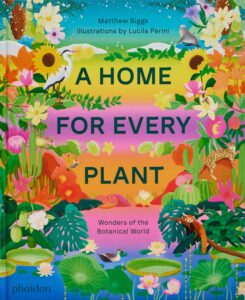
Without plants there would be no life on Earth, but most people are blind to their impact. This stylish and informative introduction to plants sets out to cure ‘plant blindness’ by introducing children to 66 amazing plants from the six major climactic zones around the world.

From the smelliest, such as the massive Titan Arum of the Indonesian rainforest, which stinks of rotting flesh to attract insects, to the hardest-working, including peat moss, an overlooked bog plant that helps protect our planet by trapping carbon dioxide, readers will learn about the vital role of plants in Nature through detailed, vibrant illustrations and fascinating facts. Children will also learn how to use their new-found knowledge of the plant’s natural environment to care for the plants around them and at home.

Matthew Biggs’ research included consulting eminent botanists around the globe and referencing scientific papers. This book teaches children about plants in the context of their natural environment, and is ideal for geography and biology curricular tie ins, as well as being a book that will inspire children to love and care for the plants around them. This is the perfect compendium for plant-lovers, budding gardeners, and would-be botanists and nature-lovers alike.
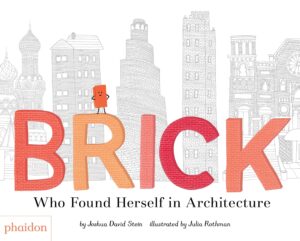
A young brick goes on a journey to find her place in the world by visiting ten celebrated brick structures around the globe. Brick’s observations begin at home and then extend globally as she travels to a diverse list of brick structures – Malbork Castle in Poland, Mahabodhi Buddhist Temple in India, Grosvenor Estate apartments in England, and more – all the while pondering where she may end up. With a tender and timeless text by Joshua David Stein and architectural line art by Julia Rothman, this tribute to becoming part of something greater serves children and adults alike.

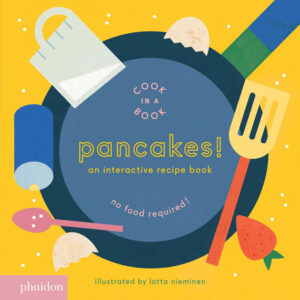
A boldly-illustrated interactive book that brings the fun into reading a sequence of instructions for making pancakes. The book’s interactive elements invite the reader to become involved with every step of the recipe; lift the flap to open ingredients, turn the wheel to mix the batter, pull the tab to ladle the batter into the pan and – of course – flip the pancake to cook the other side! A great book for classrooms – second only to frying up the real thing.

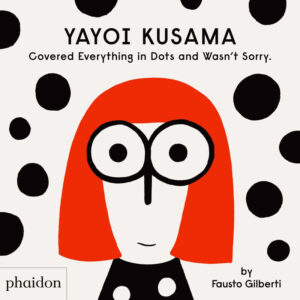
I love the title of this biography of artist Yayoi Kusama. It reflects the beautifully simple way that Kusama’s story is told in this lovely book. Unusually, it is written from Kusama’s point of view: ‘I painted hundreds and hundreds of dots onto large canvases. The dots often came off the pictures and ended up on my dress, tables and wall! But I wasn’t sorry.’

The bold illustrations are pared down but full of character and wit – like the prose.

This is the third title in a series of books introducing younger children to the lives and works of contemporary artists who broke the mould, and ‘weren’t sorry’. Jackson Pollack and Yves Klein are the other two – whole series is wonderful.

Subscribe to our newsletter

Your Review

Stone Girl Bone Girl

review

Year group(s) the book is most suitable for:

Year group(s) the book is most suitable for:

Does the book contain anything that teachers would wish to know about before recommending in class (strong language, sensitive topics etc.)?

Does the book contain anything that teachers would wish to know about before recommending in class (strong language, sensitive topics etc.)?

Would you recommend the book for use in primary schools?

yes

Curriculum links (if relevant)

Curriculum links (if relevant)

Any other comments

Any other comments