Recommended children's booklists sorted by age or topic

Publisher: Chronicle Books

Stunning watercolour images bring Antarctica to life whilst bite-sized information gives children a feel for what it would feel like to stay in Antarctica as a research scientist.

Find out about what clothes to wear, what the research stations are like, the transportation, different types of icebergs and glaciers, the types of research that take place, how the scientists relax in their downtime, the food they eat, the species of animals you will find there, fossils, famous Antarctic explorers and much, much more.

A perfect read for any pupils learning about the coldest place on earth, animals and their habitats or climate change.

As the sun sets behind the big construction site, all the hardworking trucks get ready to say goodnight. One by one, Crane Truck, Cement Mixer, Dump Truck, Bulldozer, and Excavator finish their work and lie down to rest—so they’ll be ready for another day of rough and tough construction play! With irresistible artwork by bestselling illustrator Tom Lichtenheld and sweet, rhyming text, this construction book for kids will have truck lovers of all ages begging for more.

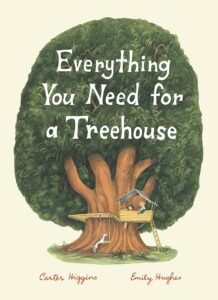
This lyrical text from author Carter Higgins gives life and meaning to all the requisite elements of a treehouse, from time, timber, and rafters to a rope of twisted twine, so you can sprawl out on a limb and slide back down again. Higgins’s text, filled with beautiful images and an incredibly readable assonant cadence, captures the universal timelessness of the treehouse and celebrates all the creativity, poignancy, and adventure inherent therein.
Picturebook

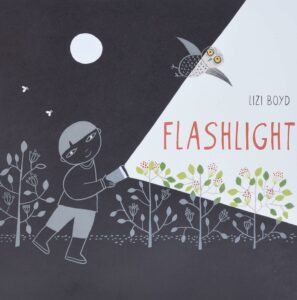
Inside a tent it’s cozy. But what is going on outside? Is it dark? Is it scary? Not if you have your trusty flashlight! Told solely through images and using a spare yet dramatic palette, artist Lizi Boyd has crafted a masterful exploration of night, nature, and art. Both lyrical and humorous, this visual poem-like the flashlight beam itself-reveals that there is magic in the darkness. We just have to look for it.

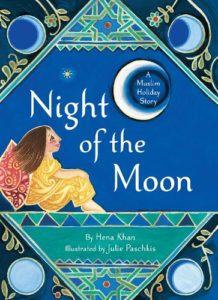
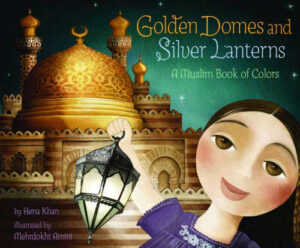
This picture book about the month of Ramadan and the festival of Eid-ul-Fitr is a gentle, light and thought-provoking story of a special time of year. The story begins at bedtime with the rising of the crescent moon and the start of the holy month of Ramadan. Told through the eyes of a young girl, it embraces family and school life as well as – in her Grandma’s words – being ‘thankful for beautiful things’. This book will be of interest to primary school class teachers and leaders – it would work well as a class story, a shared book, an individual library book or for use in assemblies. It is a beautifully illustrated story to accompany the month of Ramadan and bring life to R.E. teaching. Perfect for primary school classes including those with many, few or no Muslim pupils – the story of Ramadan unfolds telling non-Muslim pupils about the delights and significance of Ramadan from a child’s perspective. At the back of the book is an Author’s Note explaining the origins of Ramadan with clarity and simplicity as well as a comprehensive Glossary of terms.

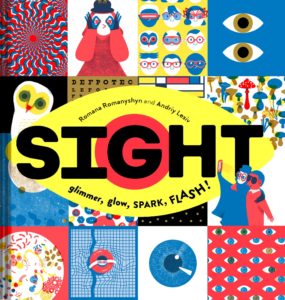
Written and illustrated by Ukrainian husband and wife team Romana Romanyshyn and Andriy Lesiv and translated into English by Vitaly Chernetsky, this is a book crammed with information, history, and thought on the phenomenon of sight. Each page is illustrated mostly in infographic style, and is very colourful and eye-catching. This book could be treated as a read-to-the-class book by reading only the larger text at the bottom of each page, and some of the smaller text could be used to spark further discussion of particular sections, or it could be pored over at length by anyone wanting to understand as much as possible about sight. There is so much information in this book it can take much, much longer to read than you might expect from a book of this format, and additionally, at the end, there are further explanations of words or phrases used and suggestions for further things to research or investigate. As well as supporting STEM-based education, this book also encourages thought and reflection on things such as beauty, the invisible, different ways of seeing the world, and ways of experiencing the world without sight. A thoroughly informative book about sight, with so much on each page.

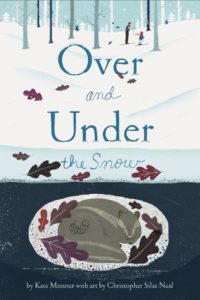
Over the snow, the world is hushed and white. But under the snow lies a secret world of squirrels and snow hares, bears and bullfrogs, and many other animals making their winter home under the snow. This beloved nonfiction picture book exploring the subnivean zone reveals the tunnels and caves formed beneath the snow but over the ground, where many kinds of animals live through the winter, safe and warm, awake and busy, but hidden beneath the snow.

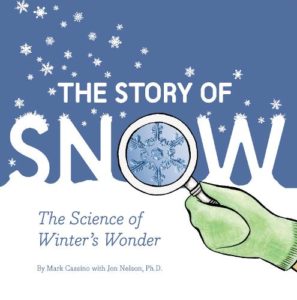
How do snow crystals form? What shapes can they take? Are no two snow crystals alike? These questions and more are answered inside this exploration of the science of snow, featuring photos of real snow crystals in all their beautiful diversity. Perfect for reading on winter days, this book by a nature photographer and a snow scientist will inspire wonder and curiosity about the marvels of snow. Snowflake-catching instructions are also included for aspiring young snow scientists!

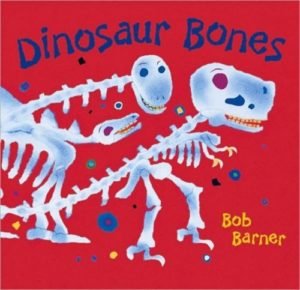
This picture book contains both a simple rhyming text about dinosaurs and a myriad of interesting age-appropriate dinosaur facts that will satisfy curious minds. Children will be drawn to the bright collage-style illustrations that accompany the text.

This isn’t just a book – it’s a GAME in a book that entices even the most reluctant of readers! One of Beanstalk’s reading helpers was working with a child who wanted to read it again and again – they couldn’t figure out how the magic worked! It involves the reader carrying out different tasks in order for the pages to turn. It can be a lot of fun to read together and carry out the ‘instructions’ with a child and can provide endless enjoyment over and over again!

Subscribe to our newsletter

Your Review

Stone Girl Bone Girl

review

Year group(s) the book is most suitable for:

Year group(s) the book is most suitable for:

Does the book contain anything that teachers would wish to know about before recommending in class (strong language, sensitive topics etc.)?

Does the book contain anything that teachers would wish to know about before recommending in class (strong language, sensitive topics etc.)?

Would you recommend the book for use in primary schools?

yes

Curriculum links (if relevant)

Curriculum links (if relevant)

Any other comments

Any other comments