Recommended children's booklists sorted by age or topic

Publisher: Barefoot Books Ltd

Can Roohi find the courage and rhythm to play the rabab at her school’s Eid concert?

“To play the music of the mountains, you must feel the rhythm, feel the beat of your people.”

Roohi’s most treasured time of the day is when she gets to listen to her grandfather play the rabab, the traditional stringed instrument of the Pashtun people. All she wants, more than anything in the world, is to be able to play songs full of rhythm like him. But even with lessons everyday, she sounds nothing like Neeka Baba’s clap-de-clap-clap rhythm and beautiful melodies.

With Eid celebrations coming up, Roohi is supposed to play the rabab at a school concert, but Neeka Baba has fallen ill, and she must perform without his help. He tells her, “Play with the courage of those who came before you.” Can Roohi draw on her ancestors’ strength and share the melody in her heart at the Eid concert?
Explores the connections made possible by music and the transformative power of learning to play a traditional instrument.
Set in a contemporary Pashtun village in rural Pakistan.
End notes include more information about the rabab, Pakistani music, Pashtun culture, and Eid.

Set 800 years ago in the Yuan dynasty, Su-Ling and her family live in a village where the Mongols have invaded and made life very difficult for them. But the villagers are smart, and a plan to revolt against the Mongols begins to form with a message tucked into the Mid-Autumn Festival mooncakes: “On the 15th day of the 8th lunar month, on the day of the full moon, commence attack at midnight.” It’s up to brave Su-Ling to deliver the message to her uncle without getting caught by the Mongol guards.

This thrilling tale based on an ancient Chinese legend keeps kids on the edges of their seats as they cheer on Su-Ling to complete her mission to deliver the message in the mooncake.
Unique, graphic novel-like illustrations
Endnotes inlcude information about mooncakes, the history of the Mongol invastion, and the original ancient legend

Not many books can be called mouthwatering, but this one truly is! The book takes a really interesting approach to explaining to children the traditions and practices of Ramadan, and for children who know Ramadan as part of their home lived experience, it may reflect aspects of their experiences and celebrate their religious knowledge.

The book focuses on a street, Rahma Road and the handy glossary at the back of the book tells us that Rahma means compassion and kindness. The book reflects these values by introducing families from wide geographical heritages, demonstrating the breadth of the Muslim faith. The narrative that threads through the text is the preparation for iftar, the breaking of the fast at sundown. Each family on the street is featured, along with a traditional recipe.

The recipes are fabulous – they are written in a way that is easy to follow and continues the narrative of the book. The illustrations are vivid and bright and capture the subtle differences in the cultural context of each family, which range from African American heritage to Palestinian to Egyptian to Australian and many more. This range of families is great for myth busting about this world religion. The language used is accessible and engaging. Different styles of writing are seen in the recipes and the narrative – this can be really helpful to support children to identify genre differences.

This is a vibrant book that will engage children with a wide range of subject areas as well as excite and motivate them to read on.

Mbote! Betuabu! Jambo! Let’s explore DR Congo! Count the fish at the market, watch the cheeky bonobos, and finish the day with a story. Even learn words in Lingala, Tshiluba, and Swahili with pronunciation guides throughout the story.
Part of the Barefoot Books Our World series
Written by Congolese author Mel Nyoko and illustrated by Joelle Avelino
Endmatter provides more insights into life in DR Congo

This book provides a lovely way to begin to introduce renewable energy to younger children.

It has bright, colourful, double-page illustrations throughout the book which also showcase the types of power used in a range of settings around the world. Each page has a short rhyming verse about that helps readers understand the process more easily. Each page also has small boxes that give further information about a particular part of the process and also highlights key vocabulary. The information pages at the back of the book provide more detail and also allow children to have experience of reading non fiction style texts. Putting these at the end allows the reader to gain some background knowledge about the subject before tackling the more difficult text. The information pages also have some great labelled diagrams that support children in understanding how the process works.

This is a great book to read aloud to an Early Years or Key Stage 1 class. It follows a simple pattern that follows a little girl through an Indian market, looking for a present for her Amma (mother). The bright and vibrant illustrations by Mariona Cabassa are a feast for the eyes and provide lots of opportunity to talk about the details of the market stalls, the range of people, animals in the illustration backgrounds. Each page features a different market stall which has its own distinctive colourful illustration and is accompanied by helpful repeated words – ‘shoo-shoo’ or ‘yum-yum’ or ‘sniff-sniff’. This enables children to join in and perhaps act out each page. The language used to describe each item in the market provides a springboard for children’s own language development and writing. This book could inspire art work as well as providing discussion points about markets children have visited, markets around the world (with a helpful guide at the back of the book) as well as an opportunity to find out more about Indian markets specifically.

Zahra hugs her cherished teddy bear and prays that Ramadan will bring her a longed-for sister. When her bear subsequently goes missing, Zahra finds herself grappling with intense feelings of loss. Over the next few weeks, as she volunteers with her mother at a local shelter for asylum seekers, Zahra befriends a displaced child, resulting in a newfound sense of gratitude and an unexpected Ramadan blessing.

Joining the Feelings & First series: a young child helps his Mum and Mama cook a green vegetable soup, but then emphatically refuses to eat it. After carefully watching his parents enjoying the meal, the child finally agrees to taste it and discovers that he likes it after all! Full of humor and sound effects, this adorable and relatable tale offers a positive model for handling food reluctance. Also available in bilingual Spanish.

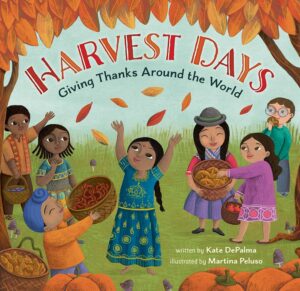
Explore harvest festivals from around the globe! Lyrical, rhyming text and lush, detailed artwork from Italian artist Martina Peluso immerse young readers in some of the most ancient traditions in the world. Nine pages of rich, educational endnotes dive deep with more information about the 12 cultures explored in the book and invite young readers to ask questions about food and the labour that produces it.
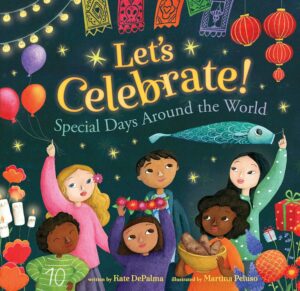
Lyrical, sensory nonfiction text and vibrant illustrations invite readers to experience a child’s-eye view of 13 special days around the world, such as the Spring Festival, Inti Raymi, Eid al-Fitr, Día de Muertos and the New Yam Festival. Includes a global festival calendar and educational notes about why we celebrate.

Subscribe to our newsletter

Your Review

Stone Girl Bone Girl

review

Year group(s) the book is most suitable for:

Year group(s) the book is most suitable for:

Does the book contain anything that teachers would wish to know about before recommending in class (strong language, sensitive topics etc.)?

Does the book contain anything that teachers would wish to know about before recommending in class (strong language, sensitive topics etc.)?

Would you recommend the book for use in primary schools?

yes

Curriculum links (if relevant)

Curriculum links (if relevant)

Any other comments

Any other comments