Recommended children's booklists sorted by age or topic

Home > Give Me Five! > Picture Books on BIG Topics for Small Children

Picture Books on BIG Topics for Small Children

icon - give me 5
5 Books on Big Topics for Small Children

5 books on big topics for small children, selected by author Donna David.

Donna says ‘Picture books are my favourite thing! They can make me snort with laughter or quietly chuckle. They can inspire me to visit somewhere or learn a new skill. Sharing books with my young children make up a large portion of my favourite memories. And sometimes, picture books can help us teach big topics to small children. They open discussions and provide a safe space for questions and exploration. Here are five of my favourites…

Add to Favourites
Please login to bookmark Close

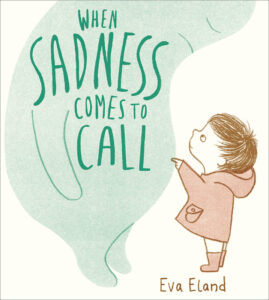
This book has very few words but it does such an incredible job of introducing the ideas of emotional literacy and mental well-being to very small children. Sadness turns up on the doorstep one day and follows our main character around. We don’t know why it came or when it will leave but it’s there. By embracing Sadness (taking it for a walk or drawing with it), the emotion becomes easier to live with until, one day, it completely disappears.

Dyslexia-friendlyPicturebook
dyslexia-friendly
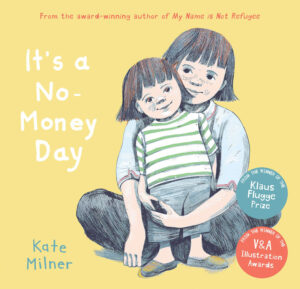
 Kate Milner’s picture book entitled It’s a No-Money Day is a must-have for primary schools. Rare in its portrayal of life on the poverty line and the experience of visiting food banks from a child’s perspective, this is a truly special book that poignantly explores its subject with due compassion and gentleness.

A young girl visits the local food bank with her mother. An emptied penny-jar at home indicates that today is a no-money day and despite the mother’s hard work and measured frugality, the duo must make a trip to the food bank in order to stock their bare kitchen cupboards.

Mum is ashamed but politely makes the best of the situation. The girl, on the other hand, sees no stigma in the experience and enjoys meeting the kind food bank workers and eating their biscuits. Could she have her favourite cereal this time?, she asks, only to be scolded by her humiliated mother. This child is a wonderful example of finding joy in life as it is; the food bank visit is a normal experience for her and she will easily see the good in it. Under the loving wing of her mother she finds other simple pleasures too, like borrowing library books, trying on clothes in the charity shops and having fun dreaming out loud of what life might offer her one day.

Kate Milner’s illustrations capture the moods and emotions of the two characters so perfectly. Mum is wearier than she wishes the girl to know but the reader can see it in the lines of her face and the curves of her posture, which also show her deep love and warmth towards her daughter. The girl is simply looking to find interest and joy as she goes on her way – as children do – and many young readers will find the child character’s perspective and acceptance of the way things are easily relatable. Who hasn’t wondered if they can have their favourite cereal when a parent selects a boring one? Who hasn’t imagined out loud a different way of life without pausing to consider the effects of those longings on a weary parent? The child’s voice is one of innocence and hope, but it’s easy for the reader to wonder what might happen to the family without the provision of food bank donations.

It’s a beautiful and poignantly-told story that deserves a place in every classroom, providing a much-needed insight for many children into life on the breadline, while offering others a rare reflection of a familiar situation and a reassuring message that they are not alone. This is a book that is suitable to use across the whole primary age range and one that will be sure to encourage empathy and discussion around a very important topic.

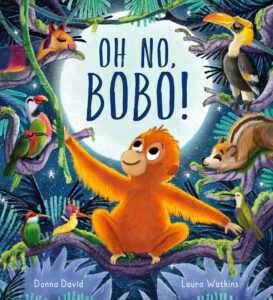
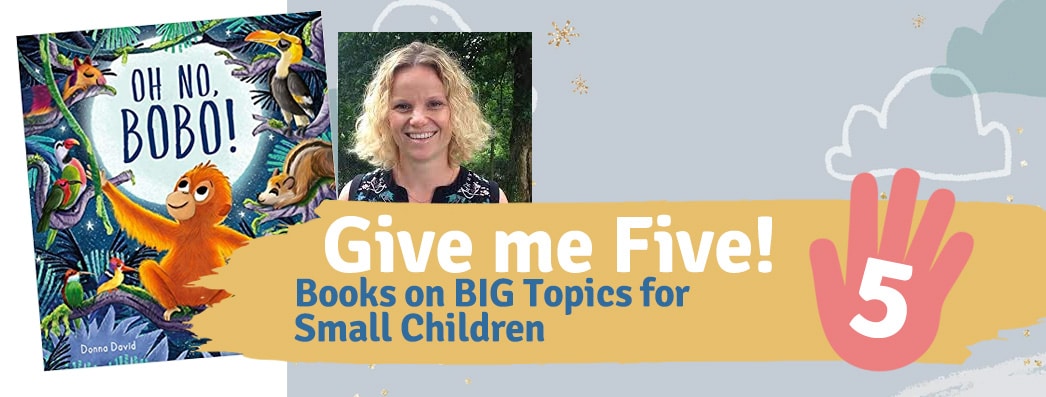
I’m a little bit biased with this one as I wrote it but I really wanted to include a picture book that gently introduces consent. I believe all children should have autonomy over their bodies and be encouraged to express it. If they don’t want to kiss someone goodbye, so be it; if they don’t want to be tickled then that’s OK.

Bobo, an orangutan, romps through the jungle cuddling animals without asking. It’s not until the very end, when Elsie the elephant does the same to him, that he realises the errors of his ways.

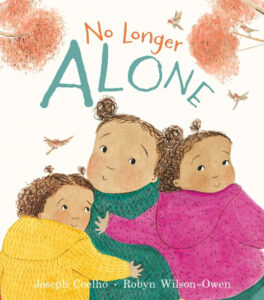
In this poignant picture book from award-winning performance poet, Joseph Coelho, a little girl is sad and feels alone. People say she’s quiet or shy, but she’s not. She’s dealing with loss in her own way and, when she’s on her own, she makes a “racket” to express her sorrow. By talking to her dad, she realises that she’s not alone. A big cuddle from Dad doesn’t make the sorrow disappear, but it makes it manageable. The last spread, with Dad and his daughters, surrounded by pictures of a missing mother, is poignant and moving.

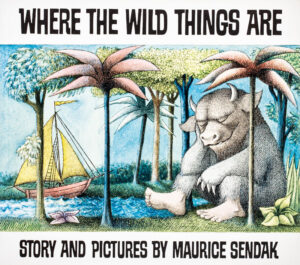
In this gorgeous picture book, first published in 1963, we go on a journey with Max, who’s been sent to his room for chasing the dog with a fork, and being an all-round wild thing. But somehow his room becomes a forest, and when he travels across the sea by boat he finds more Wild Things and becomes their king.

This book is such a classic and, as such, means so many different things to so many different people. At its heart, it teaches a young child that it’s OK to feel angry; it’s OK to take some time out. Your family will still love you. They’ll still be waiting for you when you come back. When Max stomps off to visit the wild things, he’s angry and frustrated. He’s so mad that he sails off “through night and day and in and out of weeks and almost over a year”. When he calms down, he realises he misses home and, to the disappointment of his new Kingdom, he heads back to his bedroom where his “still hot” supper is waiting for him.

This much-loved story is the embodiment of an emotion, and those powerful final lines – the release of them – are iconic in children’s literature.

Many thanks to Donna David for compiling this guest booklist for us. You can find out more about Donna’s new book Oh No, Bobo! over on our blog.

Booklists you might also like...

Subscribe to our newsletter

Your Review

Stone Girl Bone Girl

review

Year group(s) the book is most suitable for:

Year group(s) the book is most suitable for:

Does the book contain anything that teachers would wish to know about before recommending in class (strong language, sensitive topics etc.)?

Does the book contain anything that teachers would wish to know about before recommending in class (strong language, sensitive topics etc.)?

Would you recommend the book for use in primary schools?

yes

Curriculum links (if relevant)

Curriculum links (if relevant)

Any other comments

Any other comments