Recommended children's booklists sorted by age or topic

Age Group: KS3 (Ages 11-14)

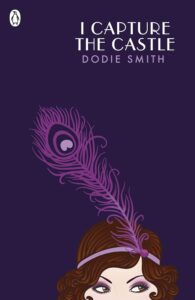
“I write this sitting in the kitchen sink” is the memorable first line of this enchanting coming-of-age story, told in the form of Cassandra Mortmain’s journal. Cassandra wittily describes life growing up in a crumbling castle, with her father who suffers from crippling writer’s block, her glamorous but ineffectual step-mother and her vain but beloved sister Rose. When two visiting Americans arrive, all of their lives are turned upside down, and Cassandra experiences her first love.

This is a classic coming-of-age story, beloved of generations of teenage and adult readers, by Dodie Smith, who also wrote The Hundred and One Dalmatians.
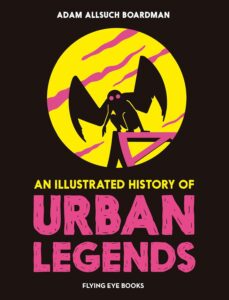
Packed with tales as old as time, unsolved mysteries and stories stranger than fiction, this introduction to urban myths contains super-succinct summaries of different urban legends and folk tales, grouped roughly by period and then theme. The range is global, which enables themes to be compared and cross-referenced across time and cultures. While many of the tales were familiar to me, many others were not. I found myself fascinated by how similar legends spring up in completely different places, responding to shared human concerns. Each story summary is followed by a very brief and measured discussion of context, plausibility and origin. This allows the authors to point out links between story traditions, identify nuggets of truth and expose wild embellishments.

Very often, the authors’ analyses pinpoint where the legends began and suggest why they were believed and passed on. This is a real strength of the book. It mitigates the horror of some of the creepier tales and provides useful warnings against disinformation – a crucial theme for today’s teens living in a world of fake news and viral story snippets.

It will appeal to KS3 students who are still building up their reading stamina, as well as lovers of the bizarre and macabre. It is broken into short sections, illustrated with contemporary, age-appropriate graphics. This structure makes it easy to dip in and out, but beware: it’s hard to put down!

This is the first in the series of Enola Holmes books, telling the story of teenage super-sleuth Enola ‘Alone’ Holmes, the much younger sister of Sherlock Holmes, the famous detective, and Mycroft Holmes, the fastidious government official.

Enola lives in the country with her mother, who is homeschooling her in subjects from fencing to the language of flowers to cryptography. On the morning of her fourteenth birthday, Enola finds her mother is missing without a trace, leaving only a few clues as to where and why she has gone. Mycroft and Sherlock soon arrive and are astonished at the unladylike but extremely astute Enola. Despite their efforts to tame her, Enola goes out into the world by herself to find her missing mother.

But it is not only Mrs Holmes who is missing. Lord Viscount Tewksbury, Marquess of Basilweather, a young man with a promising future, has also disappeared, and ransom demands have been made. Enola soon starts to investigate this mystery as well, trying to prove she is just as capable as her brothers.

This is a great tale, written in a light and fresh style, which is bound to excite avid readers. Enola is likeable, and despite being a mystery story, it is easy to follow. The books have been turned into a Netflix TV series starring Millie Bobby Brown, which is likely to draw readers towards the books.

A really good way of making a classic story more accessible to young or dyslexic readers.

The story is dark and quite creepy in places but keeps you interested throughout. I particularly liked the Barrington Stoke format as it makes what could be quite a difficult text much accessible to tackle. A great introduction to a classic.

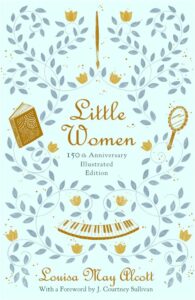
Little Women (Illustrated) is a beautifully presented edition of Louisa May Alcott’s classic novel, making this much-loved story accessible and engaging for young readers. The illustrations support comprehension and help pupils visualise the characters, setting and key moments, which is particularly beneficial when reading a classic text with more challenging language.

The story follows the four March sisters as they navigate family life, growing up, relationships and personal values. Themes such as kindness, resilience, ambition, friendship, and moral responsibility are explored in a thoughtful and age-appropriate way.

Chapter book

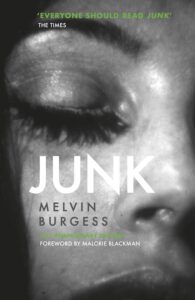
The Carnegie Medal and Guardian Fiction Prize-winning classic YA novel reissued for a new generation. With an introduction by Malorie Blackman and all-new material exploring the book’s controversial history.

It was a love story. Me, Gemma and junk. I thought it was going to last forever.

Tar loves Gemma, but Gemma doesn’t want to be tied down. She wants to fly. But no one can fly forever. One day, finally, you have to come down. Melvin Burgess’ most ambitious and complex novel is a vivid depiction of a group of teenagers in the grip of addiction. Told from multiple viewpoints, Junk is a powerful, unflinching novel about the effects of drug abuse on teenagers. Once you take a hit, you will never be the same again.

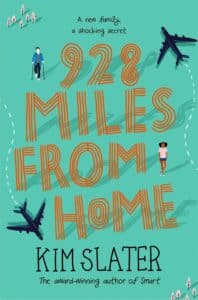
Fourteen year old Calum Brooks has big dreams. One day, he’ll escape this boring life and write movies, proper ones, with massive budgets and A-list stars. For now though, he’s stuck coping alone while his dad works away, writing scripts in his head and trying to stay ‘in’ with his gang of mates at school, who don’t like new kids, especially foreign ones.

But when his father invites his new Polish girlfriend and her son, Sergei, to move in, Calum’s life is turned upside down. He’s actually sharing a room with ‘the enemy’! How’s he going to explain that to his mates? Yet when Calum is knocked down in a hit and run and breaks both legs, everything changes.

Trapped at home, Calum and Sergei slowly start to understand each other, and even work together to investigate a series of break-ins at the local community centre. But Calum can’t help feeling like Sergei’s hiding something. Is he really trying to help, or cover up his own involvement in the crime?

928 Miles from Home is a powerful new story from the multi-award-winning author of Smart and A Seven-Letter Word, Kim Slater.

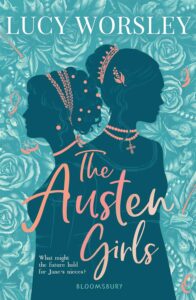
The Austen Girls is the imagined tale of Jane Austen’s nieces, Anna and Fanny, and their introduction to society, balls, mature responsibility, and matters of the heart.

Anna and Fanny are cousins who have just reached marriageable age. Close friends with very different personalities, the girls have very different views of the world and their roles and responsibilities within it. The cousins are under pressure to find suitors, one for the money, the other for family. Whilst they navigate the pressures of society during the Georgian era, a darker plot enfolds, involving scams, prison and thief-takers.

The book is written by Lucy Worsley, famous for her history television programmes and the Chief Curator at Historic Royal Palaces. She was inspired to write this tale whilst researching for a Jane Austen Biography she was writing. It is clearly written by an Austen-lover, and there is a clear respect for the author here, which may inspire readers to start to explore Austen’s works for themselves.

A delightful and composed book for secondary pupils, this is a great read.

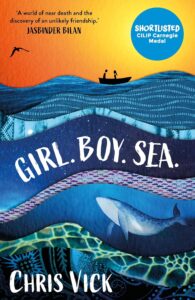
When the boat Bill is on capsizes during a ferocious storm, he becomes separated from his crewmates and ends up adrift in a tiny boat on the endless sea. A few days later, he comes across a girl, Aya, also a survivor of a shipwreck, and they decide that their chances of survival are better together.

As their hopes of being rescued quickly fade, Aya keeps Bill going with tales inspired by Shahrazad. Together they do what they have to do to survive – they learn how to create drinkable water from the interminable ocean, they realise they are going to have to kill to eat, and they try to protect themselves from the devastating heat of the sun. Then, one day, they spot land … but is it going to be the safe haven they have so desperately hoped for?

This is an incredible story of survival against the odds, of finding the inner strength to survive and of the power of friendship.

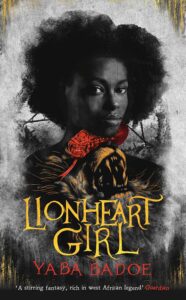
Lionheart Girl is filled with magic, mystery and intrigue. It is set in West Africa and focuses on Sheba, a girl born into a family of witches, who is just discovering the extents of her powers as well as the many secrets that sit within her extended family. Sheba’s relationship with her mother, Sika, is challenging. Sika’s powers are much more negative and destructive than those of her aunts, as well as her own. The way in which Sheba grapples with her feelings towards Sika is woven throughout the novel and offers much to reflect upon.

The story is written in the first person, which sets the reader right at the heart of the story; Sheba’s teenage voice is so clearly conveyed through Yaba Badoe’s writing and makes her relatable to the reader. Her quest to find her father brings so many challenges, and it is wonderful to see her grow into her powers as well as develop into an empowered young woman.

This gripping and powerful book deals with mature themes and is suitable for KS3 and upwards

Subscribe to our newsletter

Your Review

Stone Girl Bone Girl

review

Year group(s) the book is most suitable for:

Year group(s) the book is most suitable for:

Does the book contain anything that teachers would wish to know about before recommending in class (strong language, sensitive topics etc.)?

Does the book contain anything that teachers would wish to know about before recommending in class (strong language, sensitive topics etc.)?

Would you recommend the book for use in primary schools?

yes

Curriculum links (if relevant)

Curriculum links (if relevant)

Any other comments

Any other comments