Recommended children's booklists sorted by age or topic

Age Group: KS3 (Ages 11-14)

Chapter book
resources-available

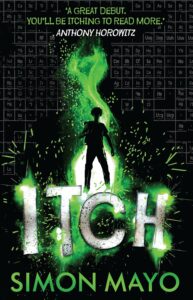
Meet Itch – an accidental, accident-prone hero. Science is his weapon. Elements are his gadgets. All-action adventure perfect for fans of Alex Rider and Young Bond.

Itchingham Lofte – known as Itch – is fourteen, and loves science, especially chemistry. He’s also an element-hunter: he’s collecting all the elements in the periodic table. Which has some interesting and rather destructive results in his bedroom.

Then, Itch makes a discovery. A new element, never seen before. At first no one believes him – but soon someone hears about the strange new rock and wants it for himself. And Itch and his family are catapulted into a breathless adventure with terrifyingly high stakes . . .

The debut novel from BBC radio presenter Simon Mayo.
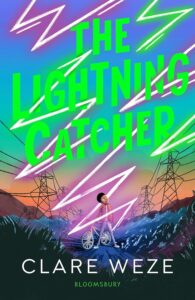
Alfie has noticed a few things since his family moved to Folding Ford. He really misses life in the city. He and his sister don’t exactly fit in here. But the most interesting one is that the weather is bonkers. One frost-covered branch on one tree in the middle of June? A tiny whirlwind in a bucket in the garden? Only in Folding Ford.

Armed with his bike, a notepad and his new best mate Sam, Alfie is going to investigate. His best clue is Nathaniel Clemm … the only thing in town weirder than the weather. When Alfie ‘investigates’ Mr Clemm’s garden, only slightly illegally, he finds a strange box that freezes his trainers and makes his teeth tingle. And when he opens it, only slightly deliberately, something gets out. Something fast, fizzing and sparking with electricity and very, very much alive. But the creature from the box brings trouble of its own, and as barometers and tempers go haywire in Folding Ford, Alfie finds himself at the centre of a perfect storm.

Skellig meets Stranger Things in this funny, heartfelt adventure story perfect for fans of Ross Welford, Christopher Edge and Frank Cottrell Boyce.

Welcome to the museum that is always open to explore…

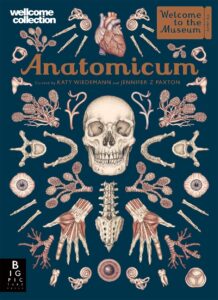
Step inside the pages of Anatomicum to enjoy the experience of a museum from the comfort of your own home. The 2019 offering from Welcome to the Museum guides readers through the human body, from the muscles we use to show emotion, to the delicate workings of the brain. With sumptuous artwork by Katy Wiedemann and expert text by professor Dr Jennifer Z Paxton, this beautiful book is a feast of anatomical knowledge.

Joint winner at the Association for Science Education Book of the Year Awards 2023!

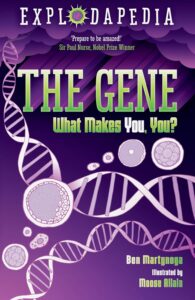
There are 40,000 genes in every cell of your body. Together, they carry all the instructions needed to make you. Nobody else has exactly the same genes as you do: you are completely unique.

Based on up-to-the-minute science, The Gene explores how these tiny tangles of DNA build and operate all living things. See what genes can reveal about you, and find out how today’s scientists ‘edit’ genes. Will these breakthroughs help or harm our future?

Grow your knowledge of genes, with the EXPLODAPEDIA!

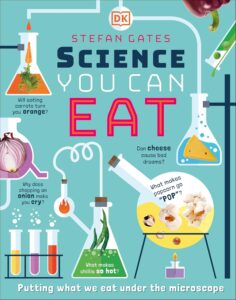
Discover the incredible, edible science that happens every time you cook, bake, or eat with this children’s book that is part-cookbook, part-science reference.

There is a fantastic mix of fun facts and knowledge, context and science experiments for kids in this educational book. The experiments are easy to execute at home with things you have around the kitchen. The instructions are detailed but easy to understand, so some kids could even adventure solo through its pages.

Enjoy the delightful weirdness of tricking your taste buds, making slime taste delicious, investigating some of the strangest flavours around and extracting iron from your cereal!

Science You Can Eat helps your little one understand what’s happening with their food and why. Each page is guaranteed to leave you hungry for more – we’d wager even adults will learn a thing or two from this culinary escapade.

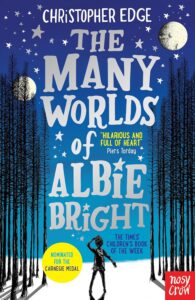
An extraordinary novel for anyone who’s ever been curious from award-winning author Christopher Edge.

When Albie’s mum dies, it’s natural he should wonder where she’s gone. His parents are both scientists and they usually have all the answers. Dad mutters something about Albie’s mum being alive and with them in a parallel universe.

So Albie finds a box, his mum’s computer and a rotting banana, and sends himself through time and space to find her…

Non-fiction

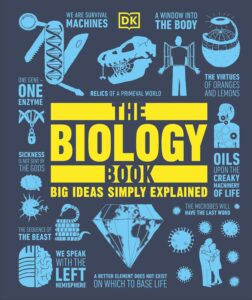
Learn about the most important discoveries and theories of this science in The Biology Book.

Part of the fascinating Big Ideas series, this book tackles tricky topics and themes in a simple and easy to follow format. Learn about Biology in this overview guide to the subject, brilliant for novices looking to find out more and experts wishing to refresh their knowledge alike! The Biology Book brings a fresh and vibrant take on the topic through eye-catching graphics and diagrams to immerse yourself in.

The Biology Book is a captivating introduction to understanding the living world and explaining how its organisms work and interact – whether microbes, mushrooms, or mammals. Here you’ll discover key areas of the life sciences, including ecology, zoology, and biotechnology, through exciting text and bold graphics.

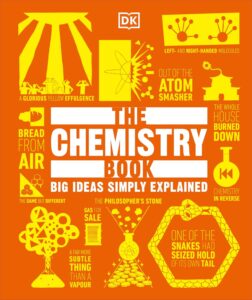
Discover and understand the key ideas that underpin the core science of chemistry and learn about the great minds who uncovered them

Written in plain English, The Chemistry Book is packed with short, pithy explanations of some of the most historic moments in science, from the birth of atomic theory to the discovery of polyethylene and the development of new vaccine technologies to combat COVID-19. Simple graphics, such as flowcharts and mind maps, support the text and make the explanation of key concepts easy to follow.

Arranged in chronological order, the book covers key themes in the physical and natural sciences, such as geochemistry and the elements. Within each chapter, a series of articles traces the history of scientific thought and introduces the work of the scientists who have shaped the subject such as John Dalton, Marie Curie, Dmitri Mendeleev, Kathleen Lonsdale, and Stephanie Kwolek.

Whether you are new to chemistry, a student of the sciences, or just want to keep up with and understand the latest news and scientific debates, The Chemistry Book is for you.

Non-fiction

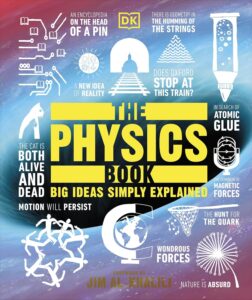
Part of the fascinating Big Ideas series, this book tackles tricky topics and themes in a simple and easy to follow format. Learn about Physics in this overview guide to the subject, brilliant for beginners looking to learn and experts wishing to refresh their knowledge alike! The Physics Book brings a fresh and vibrant take on the topic through eye-catching graphics and diagrams to immerse yourself in.

The Physics Book is the perfect introduction to the science, aimed at adults with an interest in the subject and students wanting to gain more of an overview. Here you’ll discover more than 90 of the most important laws and theories in the history of physics and the great minds behind them. If you’ve ever wondered exactly how physicists formulated and proved groundbreaking abstract concepts, this is the perfect book for you.

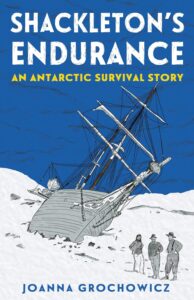
Adrift on the Antarctic pack ice with no means of escape and no hope of rescue, Ernest Shackleton and his men are surely doomed.

In August 1914, Ernest Shackleton and his men set sail for Antarctica, where they plan to cross the last uncharted continent on foot. In January 1915, his ship, the Endurance, becomes locked in pack ice. Later, it sinks without a trace.

To survive, Shackleton and his crew of twenty-seven men must undertake a trial even more extreme than their planned crossing of the frozen continent. Their aim is to make it home against tremendous odds, with only lifeboats to cross the heavy seas of the South Atlantic – and the life-saving power of Shackleton’s extraordinary leadership skills.

Subscribe to our newsletter

Your Review

Stone Girl Bone Girl

review

Year group(s) the book is most suitable for:

Year group(s) the book is most suitable for:

Does the book contain anything that teachers would wish to know about before recommending in class (strong language, sensitive topics etc.)?

Does the book contain anything that teachers would wish to know about before recommending in class (strong language, sensitive topics etc.)?

Would you recommend the book for use in primary schools?

yes

Curriculum links (if relevant)

Curriculum links (if relevant)

Any other comments

Any other comments