Recommended children's booklists sorted by age or topic

Age Group: KS3 (Ages 11-14)

Being able to clearly and confidently articulate ideas, to engage in discussion, and to listen actively to others are critical life skills that everybody should have, and ‘How to Speak and Be Heard’ is an engaging read, which sets out to provide children with the necessary tools to develop these important skills.

This colourful book provides a relatable rationale for developing oracy skills – it looks at how the way people communicate on a daily basis (not only when they are speaking publicly) impacts whether their voice is heard. Importantly, the book also considers non-verbal form of communication including sign language, facial expressions and body language.

This KS2 book looks at all aspects of oracy and provides clear steps for readers to take and activities for them to engage in to help them to become better communicators in every day life and to be able adapt their communication style in different situations. This is an essential, well-written and informative tool kit for children and an excellent teaching resource for both teachers and parents.

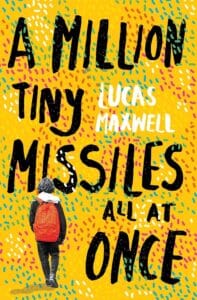
Set in the freezing Nova Scotia winter, A Million Tiny Missiles All At Once draws on Lucas Maxwell’s upbringing to set the scene for his breath taking debut novel.

Dropping back ten years as an introduction Maxwell deftly utilises an incident from Elias’s early childhood to give a meaningful insight into who Elias is and how autism affects him. Back then, Elias knows his brother Bo would go to the ends of the earth to look after him but Bo has grown more distant and barely grunts at him nowadays, his parents are arguing and he knows he needs to do something about it. A talent show at the school could just be the key to helping but will it be too little too late?

Beautifully eloquent, heart-breaking yet uplifting, Maxwell doesn’t hide from the, at times, harsh reality of life. Dealing with a life spiralling due to addiction and associated debts, neurodiversity, poverty and the physical and mental strains that can put on families. This is also a story of hope, of the kindness of friends and strangers, of the power of human strength and determination in the face of adversity when powered by love. If that all seems to heavy for some, Maxwell also peppers the story with a series of puns, from Elias in preparation for his comedy sketch at the talent show, which you can’t help but chuckle at, confusing anyone who happens to observe you reading it. Quite how so much can be squeezed into such a relatively concise text is somewhat baffling, but it unequivocally works.

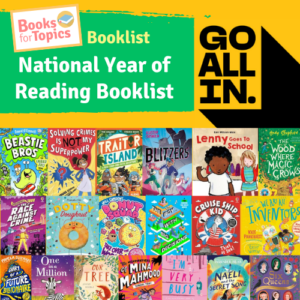
Best Children’s Books for the National Year of Reading

national year of readingThe Department for Education has teamed up with the National Literacy Trust to launch a National Year of Reading in 2026 to revitalise reading engagement across the UK. At BooksForTopics, we are supporting this initiative by showcasing the very best in recently published children’s literature. We believe that introducing pupils to fresh, contemporary voices and modern storytelling is one of the most effective ways to build a vibrant Reading for Pleasure culture.

Our experts have curated this Year of Reading book collection to feature the latest “must-read” titles, ensuring your school library stays current and exciting. By aligning these new releases with our established Year Group Recommended Reads and specialised Topic Lists, we’ve created a roadmap for teachers to integrate the newest bookshelf favourites into their daily practice.

New Releases and Strategic Picks by Year Group

To help you navigate the National Year of Reading with the latest titles, we have highlighted these standout picks:

Beyond fiction, this collection includes recent non-fiction gems that bring subjects to life. There Was a Roman in Your Garden is a fresh addition to our Romans Topic Booklist, while the new Hunt for the Golden Scarab offers a thrilling hook for those exploring the Ancient Egypt theme. For budding KS1 scientists, the recently published The Great Pollination Investigation fits perfectly within our Science & STEM book recommendations.

Resources for Schools

Explore the full collection of new 2026 releases below and remember that schools can save 20% on school book packs via our partners at Peters when ordering these sets.

Young readers can even record their reading on our printable checklist!
Chapter book

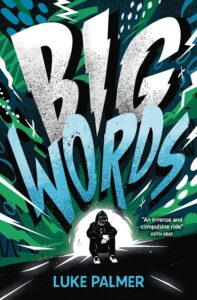
This book drew me in immediately with its direct window into the antics and friendships between a group of boys finding ways to amuse themselves. As the reader, I watched the game that the boys play at the wasteland with a sense of foreboding and my heart in my mouth. What starts off as a silly game between friends, through peer pressure and daring each other to be bigger, fearless and tough, ends badly, impacting on the friendships between the boys as they begin to fall apart.

The main character, Sam, who drives the dangerous game, has to deal with the guilt, anger and fear as he tries to cover up the accident, as well as navigating how to get the friendships back on track. This book explores the themes of friendship, peer pressure and forgiveness, as it questions the role of masculinity, which is a very prevalent topic in today’s current climate.

This is an excellent text to use as stimulus for discussion around these topics and this short book provokes big and important conversations. Published by Barrington Stoke, this book is dyslexic-friendly and will engage all readers, including those struggling or reluctant readers, so its powerful themes, and messages around choosing kindness, can reach as many children as possible.

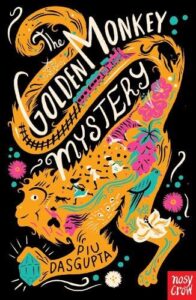
The Golden Monkey Mystery is an exciting, old-fashioned adventure story set against the vibrant and mysterious backdrop of the Indian jungle. At its heart is Roma, a spirited Indian schoolgirl who dreams of adventure and, more unusually for the period, of becoming a doctor in a male-dominated world.

When Roma discovers a rare golden monkey, she becomes determined to return it to its rightful home in the foothills of the Himalayas. Inevitably, the journey is far from straightforward. A dangerous group of thieves and bandits are also searching for the valuable animal, while the mysterious Snakestone – a priceless gemstone rumoured to carry a deadly curse – adds another layer of intrigue.

Along the way, Roma encounters two rather spoilt English children who are initially ill-equipped for jungle exploration but eagerly join her quest.The result is a fast-paced adventure packed with danger, mystery and narrow escapes. The author draws deliberately on some familiar and stereotypical conventions of traditional adventure fiction: hidden treasures, exotic locations, ruthless villains and seemingly impossible journeys. For teachers, this could provide an interesting opportunity to explore how adventure stories are constructed, while also encouraging pupils to consider how places and cultures are represented in fiction.

Roma is an engaging and determined protagonist whose ambitions challenge the expectations placed upon girls in the period. With its combination of mystery, peril and humour, The Golden Monkey Mystery should appeal particularly to confident KS2 readers who enjoy traditional quest and adventure stories.

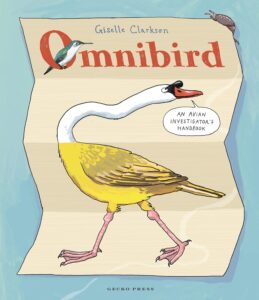
Omnibird’s subtitle, ‘An avian investigator’s handbook’, sums this book up well. This is no dry and dusty bird guide, this is an investigator’s handbook full of hints and tips and guides to reading clues in order to help the reader play detective and identify the birds who live all around us. From the shape of their wings to the sounds they make and their colouring and patterns, this book covers all the things to look for when trying to identify a bird.

With sections on how eggs are formed, the various jobs birds do in our environment and even the steps to take to help rescue a bird trapped indoors, as well as information on many of our most familiar birds, this is a fascinating book for both budding ornithologists, as well as anyone with an interest in the natural world.

The illustrations are bright and eye-catching and the information is laid out in a very accessible, child-friendly, humorous way. A brilliant addition to any primary classroom or library.

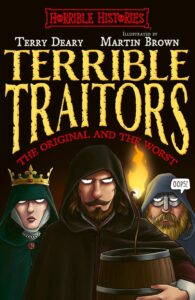
This a a clever tie-in to the current interest in traitors, following on from the TV programme of the same name. It is fairly typical Horrible Histories fare, with their trademark humour and puns.

It tells us of fifty-two assumed traitors, from 2700 BC (the Awful Ancients) to 1945 (the Woeful Second World War) and gives us two to three pages of information about each turncoat, dispelling certain myths along the way. There are twenty-six time periods covered, including Rotten Romans, Slimy Stewarts and Vile Victorians, as well as regional headings such as Wales, USA and The British Empire.

Readers will definitely learn some new facts, no matter what they already know about the time periods, although the number of pages allocated to the double-crossers means that their deeds are relatively précised with the included trademark illustrations. There is a brief ‘Did You Know?’ section at the end of each tale of treachery that gives interesting facts, and children are encouraged to think about the despicable deeds and consider whether there might be extenuating circumstances.

It’s the sort of book that I can see children dipping in and out of, rather than reading it all at once. It covers so much of history that it may be of limited use within the school curriculum, apart from a Crime and Punishment topic. It would be good fun for debate and discussion in Key Stage 2.

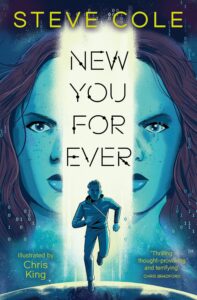
‘New You For Ever’ is a futuristic thriller where artificial intelligence has taken over the world – a world that is suffering from the devastating effects of climate change – a world where extreme measures are being explored to solve the climate crisis.

The ‘New You Foundation’ is giving people the chance to turn themselves into a Pleeka – a replica of their own body with their personality and memories uploaded but importantly a body that can live forever without using up scarce resources such as food and water. Advocates of the Foundation are calling for everyone to turn Pleeka to take the strain off Earth, and influencers and celebrities are jumping on the bandwagon.

Anders and his dad are journalists reporting on the Foundation. But Anders becomes suspicious about the true intentions of the organisation and he is determined to discover the truth.

This is an easy gripping read, which explores an extreme future scarily based on reality. It will certainly make you think!

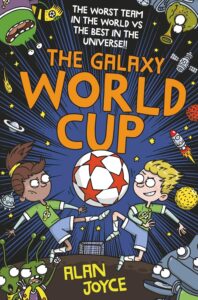
This is a hilarious book about daydreamer, Nick who gets a detention for well, daydreaming along with his friend Eddie, who thinks he saw a spaceship land in the woods. They join Phil, angry Mia and tech-savvy Sanjay in detention.

The PE teacher, Mr Barton wants them to play against talented Lucas and his team in the Community Centre. If that’s not bad enough they have to wear unwashed kit. The names on the back of the T-shirts are: Ronaldo, Messi, Mbappe, Morgan and Haaland. When they lose miserably, they are made to run laps around the park but they hear strange noises coming from the woods. When they see a green light they go in and are kidnapped by alien, Gaux and robot, Nauton who mistake them for the names on the back of their T-shirts to play in the Galaxy World Cup on the planet Bigpu!

Back on Earth, friends, families and teachers watch them as they play match after match. This was a gripping read with so many funny parts. Mia is always shouting, Phil is always vomiting and Sanjay can’t stop sneezing. This book would be perfect for football fans and fans of funny books alike. Although they seem like misfits who have nothing in common they actually work well together and learn they have ther own strengths.

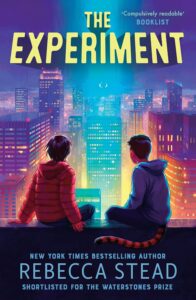
I was hooked into the story from the first couple of pages with questions as to why a boy named Nathan is locked in his room by his family, and why they are being summoned to the mysterious ‘Wagon’ – a journey that Nathan is clearly very reluctant to take.

The reader then discovers that he’s an alien from the planet Kast, and that his peers in the group, who arrived on Earth together, are disappearing. Nathan is also on a meticulously controlled and monitored food intake: Hester – the Kast leader – needs to see how long their people can maintain human form and blend in. When Nathan grows a tail, that’s clearly no longer possible, and this is why he and his family are summoned to the Wagon – their hidden spaceship – to meet Hester.

Once on the ship, it becomes clear that the situation is not as Nathan has been led to believe, and he has to try to convince his parents that they must all take action. When Nathan takes matters into his own hands and becomes trapped with Hester on the Wagon, the shocking truth about their identity and Hester’s experiments is revealed.

It’s a highly original story that explores our sense of belonging and what it is to be human – or alien. It does challenge a few preconceptions and has further themes of friendship, family and identity. It would be a fabulous science fiction read – more in this genre than fantasy – and would appeal to fans of Christopher Edge or Alistair Chisholm.

Subscribe to our newsletter

Your Review

Stone Girl Bone Girl

review

Year group(s) the book is most suitable for:

Year group(s) the book is most suitable for:

Does the book contain anything that teachers would wish to know about before recommending in class (strong language, sensitive topics etc.)?

Does the book contain anything that teachers would wish to know about before recommending in class (strong language, sensitive topics etc.)?

Would you recommend the book for use in primary schools?

yes

Curriculum links (if relevant)

Curriculum links (if relevant)

Any other comments

Any other comments